
Ahead of his speech at the Lighthouse this weekend to mark Holocaust Memorial Day, Melvyn Leach has reflected on the experience that changed life for him and his family forever.
For more than 40 years, Melvyn believed he knew his relative Willy well. They were close friends as well as family, visiting each other regularly despite living on different continents. Yet for decades, one defining chapter of Willy’s life remained unspoken.
The story Melvyn uncovered is one he will share with a local audience this Sunday, when people in Poole gather to mark Holocaust Memorial Day. As this year’s speaker, he will recount how a member of his own family survived the Holocaust as a hidden child in Nazi-occupied Belgium, revealing the human reality behind a history often reduced to numbers.
Melvyn said: “I always knew Willy was born in France in 1933. But I knew nothing about what happened to him during the war.”
It was only in 2011, during a quiet conversation at Melvyn’s home, that the truth began to surface. Willy, now 92, started to talk about his childhood as a Jew in Nazi-occupied Belgium and revealed that he had survived the Holocaust as a hidden child.
For most of his life, Willy had chosen silence. As a teenager after the war, he deliberately forced himself not to remember what he had endured, fearing the impact it might have on his mental health. Those memories, he told Melvyn, still haunted him. It was only in his late seventies that he decided to confront his past, driven by a desire to explain to his two adult sons what had happened to him and to the grandparents they had never known, Bluma Wellner and Maurice Halpert.
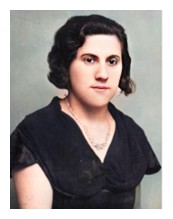
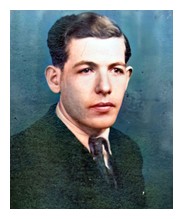
Unsure where to begin, Melvyn offered to help. Sitting together at a computer, they started with the barest outline: a date of birth, a present-day date, and the gaps in between. As Willy struggled to remember, one revelation stood out. The name Melvyn that he had known for decades was not the one Willy had been born with.
“His real name is Akiba Halpert,” Melvyn says. “I had never known that.”
After Willy left the room, Melvyn searched the name online. The result led him to Yad Vashem, the World Holocaust Remembrance Centre in Israel. There, Akiba Halpert was listed alongside his sisters on a register of Jewish children hidden in Belgium during the war. The record named the woman who had helped save them: Andrée Geulen.

What followed was years of research and a journey back through history. In 2014, Melvyn and Willy travelled to Belgium for two weeks, visiting archives, museums and the places where Willy had once been hidden. Among them was the Château de Belœil, today a stately home open to visitors, but during the war a refuge for orphaned children.
The château’s owner at the time, the socially minded Prince de Ligne, had opened his home to children displaced by the conflict. During the war, it became a temporary refuge for children who had lost their families or been separated from them, offering a brief sense of stability amid the uncertainty of occupation.
When fears grew that the location had been compromised, the hidden Jewish children were moved again, part of a network built on secrecy and trust.
At the heart of that network was Andrée Geulen, then just 20 years old and working as a nursery school teacher. Her decision to join the resistance was shaped by a single traumatic moment early in the war. Ordered by Nazi authorities to separate Jewish and non-Jewish children in her care, she watched as the Jewish children were taken away. They never returned.
Motivated by what she had witnessed, Geulen adopted a false identity and joined the resistance. Alongside around a dozen other young women, she helped hide several thousand Jewish children; the exact number is unknown. Their operation relied on extraordinary organisation and secrecy. Children were assigned numbers rather than names; real identities were separated from false ones; and records were kept in multiple hidden locations so that no single person could reveal everything if captured and tortured.
Willy’s number was 1652. In one notebook, that number corresponded to his birth name, Akiva Halpert. In another, it was linked to his hidden identity: Willie van Hamme.
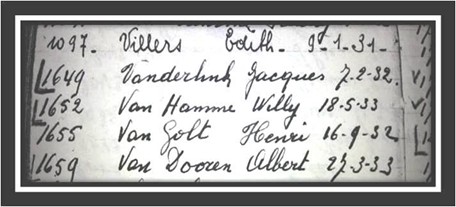
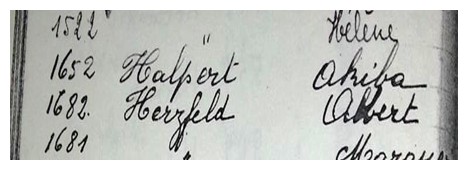
Years later, Melvyn and Willy met Andrée Geulen in her nineties at her flat in Belgium. She showed them the handwritten notebooks she had kept throughout the war, tangible evidence of the lives she and others had risked everything to save.
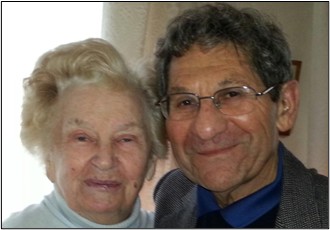
Willy’s journey into hiding began in August 1942 during a street roundup of Jews. As Belgian police collaborators carried out arrests under Nazi orders, his father pushed him towards a resistance worker, ensuring the officers would not realise the child was his son. His father was deported to Auschwitz-Birkenau and murdered simply because he was Jewish.
What Willy did not know at the time his father was arrested that his mother was pregnant. She gave birth shortly before entrusting her baby and two young daughters to the resistance, never to see them again. Willy’s mother was later deported on one of the final transport trains to Auschwitz-Birkenau and was murdered there.
“The idea of a mother giving her children to complete strangers, not knowing what would happen to them, is almost impossible to comprehend,” Melvyn says.
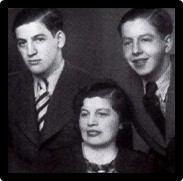
After the war, the resistance’s meticulous records made reunions possible. Using the hidden notebooks, Willy was eventually reunited with his sisters. They were sent to Australia to live with an uncle who had survived. But survival did not mean recovery. Their uncle struggled emotionally and financially to care for the children due to the grief he carried having lost his wife and their 2 sons.
His nephew and nieces were placed in an orphanage. By the age of 15, Willy had effectively become the head of the family, looking after his sisters.
Today, Melvyn shares Willy’s story at schools and community events across the UK through the organisation Generation 2 Generation. For him, the power of the story lies in its personal connection.
For Melvyn, sharing his family’s story is not about drawing an audience, but about preserving memory. He believes Holocaust education rooted in personal testimony is increasingly vital at a time when the number of survivors is fewer and historical distortion is growing.
More than eight decades on, Willy’s survival and the courage of those who risked everything to protect him stand as a reminder of both the depths of human cruelty and the power of moral choice. It is a story shaped by silence, loss and resilience, and one that continues to carry responsibility far beyond the family who lived it.
Melvyn Leach will share his cousin’s story at this year’s Holocaust Memorial Day event in Poole, offering local audiences the chance to hear first-hand how individual lives were affected by one of history’s darkest chapters. The event takes place at Lighthouse Poole this Sunday and is open to the public, inviting the community to come together to remember, reflect and make sure that stories like Willy’s are never forgotten.
 Musgrave set for fifth Winter Olympic Games