

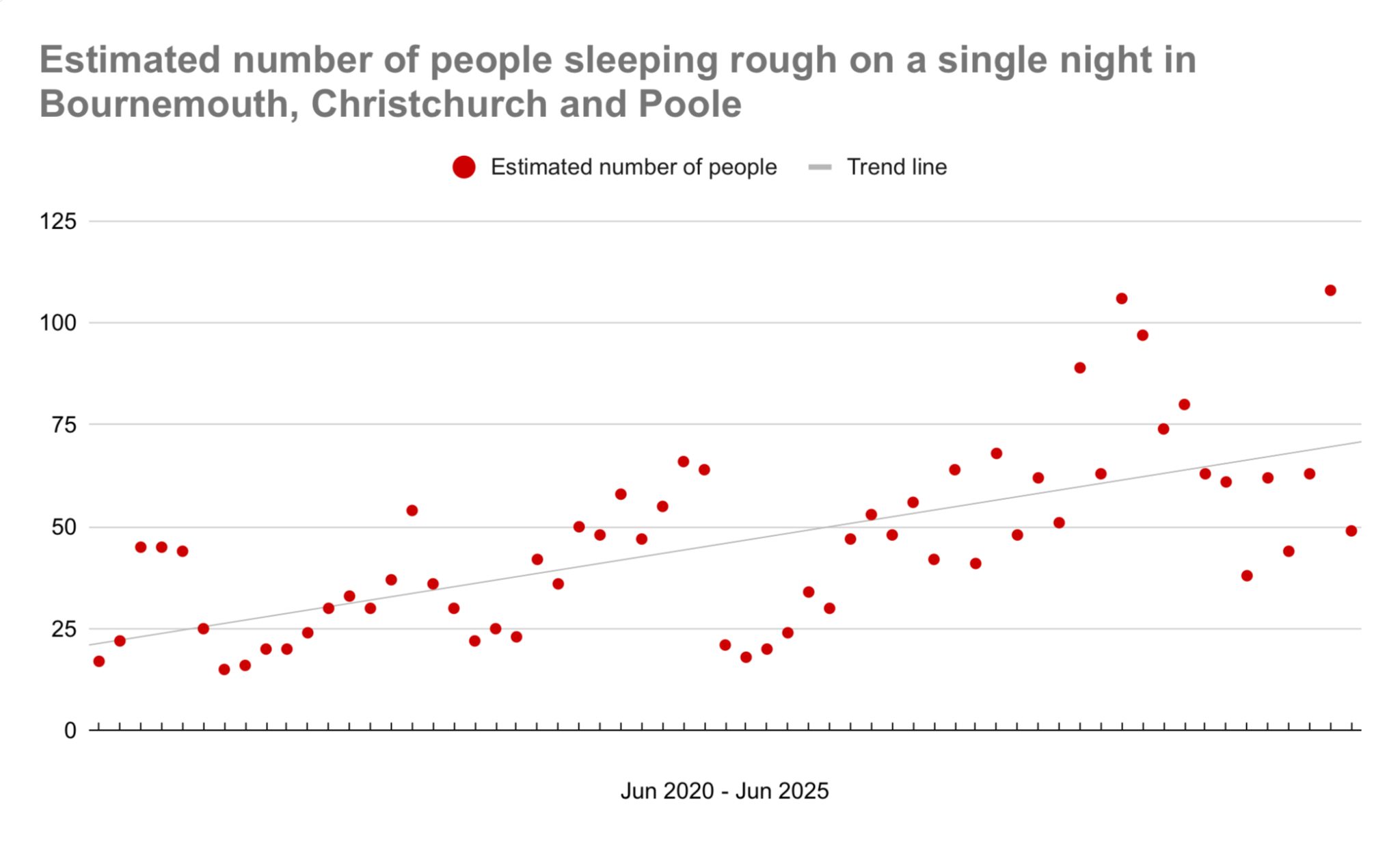
BCP Council has reported a 70% reduction in homelessness over the past two years, as part of its evolving Homelessness Strategy, which focuses on increasing accommodation capacity and preventing people from ending up on the streets in the first place.
The strategy, which runs to 2026, is measured by the central government using a Red, Amber, Green (RAG) system and has shown consistent improvement, according to Councillor Matthew Gillett, who represents Talbot Woods.
“There has been an improvement in the number of places for single homeless people over the last couple of years, and generally speaking, that has shifted a lot of the homelessness,” he said.
Expanding accommodation capacity
A central aim of the strategy has been to expand housing supply. Since 2023, 24 new homes have been built on Herbert Avenue, primarily to support families at risk of homelessness. In addition, the council has added 60 new rough sleeping accommodation units, alongside 67 existing homeless units already operating across the area.
Councillor Gillett said these measures mean that, in theory, there should be enough accommodation available.
“There shouldn’t be too many people who are homeless and don’t have access to accommodation… but I do recognise that sometimes there are barriers to people wanting to go into those units.”
Those barriers, he explained, often include mental health issues, addiction, and practical challenges such as owning pets, which can make shared accommodation unsuitable.
Prevention over reaction
While emergency housing remains a key part of the strategy, the council says its focus is increasingly on prevention, intervening before people reach crisis point.
For individuals and families facing eviction, early intervention includes referrals to charities such as Shelter, as well as direct support from the council.
However, Councillor Gillett acknowledged that by the time eviction proceedings begin, people are often already close to homelessness.
“At that stage, they are already about to be made homeless. Ideally, you want to stop the eviction, that’s the preventative measure.”
The strategy also works alongside other agencies in complex cases, such as domestic violence, where housing alone may not resolve the situation.
Community resistance and funding pressures
Despite progress, the strategy has not been without criticism. One of the biggest challenges, according to the councillor, is community resistance to homelessness accommodation being built nearby.
“Everyone wants homelessness off the street. Nobody wants the homeless shelter in their area,” he said.
One homelessness shelter located within his own ward in Talbot Woods went ahead only after residents were consulted and agreed to its placement. Councillor Gillett described public objection as one of the biggest obstacles to expanding provision, even when funding and charitable support are available.
On funding, he suggested the key pressure point is not homelessness budgets themselves, but health and adult social care services.
Looking ahead
Looking five years into the future, Councillor Gillett said that homelessness in BCP should be largely preventable under current policies, with remaining cases linked to complex support needs rather than lack of housing.
“There is genuine homelessness in BCP currently, but that is generally because there are barriers to access due to mental health and addiction.”
As the council continues to consult the public on its Homelessness Strategy 2026, the challenge remains balancing housing provision, community concerns, and long-term support for the most vulnerable.
 BCP Council to protect 99% of subsidised bus journeys