
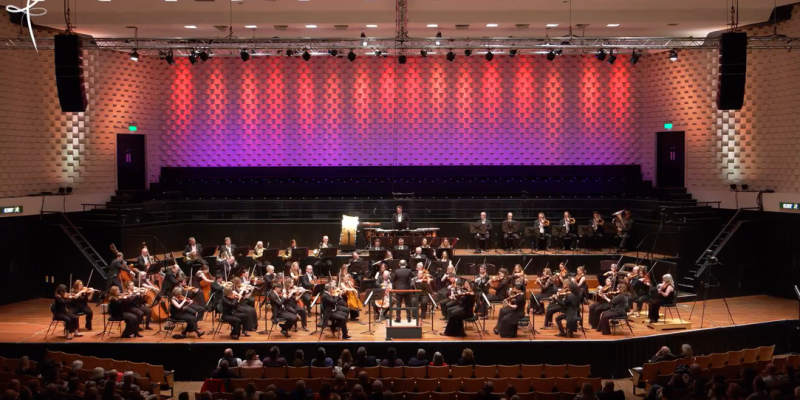
For many young people, the word orchestra still carries a certain stereotype: formal, old-fashioned, and not quite for “people like me”.
But behind the black suits and classical scores lies something far more relatable: a space for stress relief, self-expression, and community.
Speaking to musicians from the Bournemouth Symphony Orchestra (BSO), it becomes clear that orchestra life is not just about playing Mozart or Beethoven. It’s about teamwork, mental wellbeing, and finding confidence skills that extend far beyond the concert hall.
“You’re a tiny cog in something extraordinary”
Emily Davis spent 20 years playing violin with the London Philharmonia Orchestra before becoming a freelance musician. She describes orchestra life as intense, emotional, and deeply rewarding. She shared:
“The high of being in an orchestra is like being a tiny cog in an incredible machine, when it’s working at its best, it’s mind-blowing. You’re creating something amazing together.”
That sense of teamwork is a recurring theme. The musician compares orchestra playing to being part of a sports team, except the goal is shared expression rather than competition.
“You see people at their very best and very worst,” she explains. “You travel together, rehearse together, and perform under pressure together. There’s a bond that comes from that.”
For young people who may not feel at home in traditional team sports, orchestra offers an alternative way to belong, one where difference is encouraged, not sidelined.
Music as stress relief and brain training
Beyond social benefits, music has a measurable impact on mental health. Davis points to research showing that playing music improves brain function and logical thinking, engaging both sides of the brain simultaneously.
“Listening to music can be very calming,” she says. “And learning an instrument teaches discipline, focus, and confidence, especially when you have to perform in front of people.”
That confidence carries into other areas of life. Performance anxiety, Davis argues, is not something to fear.
“People get anxious because they care,” she explains. “If you can learn to manage nerves on stage, you can take that into exams, presentations, interviews, anything.”
Breaking the myth that classical music isn’t “for everyone”
Michael Chaffin, Sub-Principal No.4 Double Bass with the BSO, believes one of the biggest barriers for young people is the idea that classical music is inaccessible or elitist.
“Classical music has this air about it that it’s not accessible,” he says. “Historically, that’s just not true. It’s important that kids know it is for them.”
Through the BSO’s Explore the Orchestra concerts, primary school pupils are introduced to live orchestral music interactively and engagingly. The programme blends familiar classical works with newly written, child-friendly pieces, helping young audiences connect emotionally rather than academically.
“If you ask anyone in the orchestra, they’ll have a memory from childhood, usually primary school age, where music sparked something,” Chaffin says. “That spark can turn into a lifelong passion.”
Orchestra is about people
While orchestra musicians are highly skilled, both Davis and Chaffin stress that perfection isn’t the point.
Chaffin admits that even professionals feel nervous before concerts and auditions. His solution? A carefully curated Spotify playlist, chewing gum on stage, and learning to “move on like a goldfish” when mistakes happen.
“You need a bit of nerves,” he says. “You just have to learn to ride the wave.”
That honesty challenges the myth that musicians are fearless or flawless, a message that could reassure young people worried about “not being good enough” to try music.
A modern orchestra for a modern audience
Classical music is also evolving. Davis highlights projects like Candlelight Concerts, where string quartets perform everything from Vivaldi to ABBA, Queen, Bollywood soundtracks, and The Lord of the Rings.
“People absolutely love it,” she says. “Maybe classical music just needs to be presented differently.”
For students juggling deadlines, anxiety, and constant digital noise, orchestra offers something increasingly rare: focus, creativity, and shared human experience.
As Emily Davis puts it, “Music isn’t just an extra. It’s essential.”
 Inside Black Knight Football Club and Bill Foley