
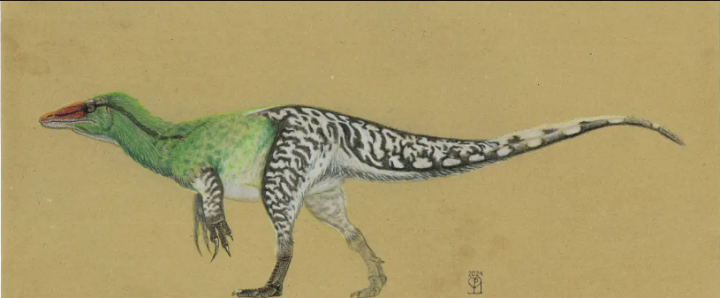
Researchers discovered a 100 year fossil overlooked from the Isle of Wight to be a new Megaraptor species.
It is the first of its kind to be found in Europe and been named Invictabellatrix amberina meaning “unconquered female warrior”.
It’s remarked as a significant discovery as it is the first time a Megaraptor has been discovered outside of South America, Thailand and Australia.
Megaraptors are large carnivorous theropod dinosaurs from the Cretaceous and are recognisable by their powerful forelimbs with huge claws that can reach up to 35 cm’s.

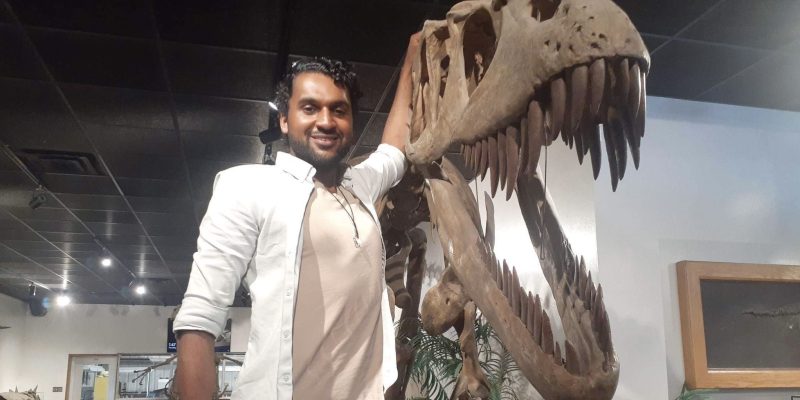
Lead researcher Dr Cassius Morrison of University College London (UCL) said “It hadn’t been studied until I came along and was assumed to be a megalosaur from the back of the skull initially.
“I would like to think it was under some magical barrier waiting for me to come and find a new species of dinosaur because theropods are most sought after to study and unfeasible that it was sitting there in plain sight.”
It was found in 1924 at the foot of a cliff on the South-West side of the Isle of Wight by palaeontologist Reginald Walter Tooley and was obtained by the Natural History Museum.
The Isle of Wight represents the Early Cretaceous dinosaur hotbed in Europe with over 20 distinct species found amongst its coasts.
Dr Cassius Morrison said “Isle of Wight is probably the most dinosaur rich fossil site in the UK and one of the most dinosaur rich places in Europe so it’s highly productive in finding dinosaur fossils there.
“The paper also suggests that where this specimen was found, we’ve got most different dinosaur groups being preserved near and around that section of the cliff.
“I think it’s very important, it shows one, megaraptorians were far more widespread than previously thought and It had been hypothesised that, so this is really good proof of potentially that they were more globally distributed.”
There is potential for further discoveries in the Isle of Wight and neighbouring coasts through increased erosion of the banks.
This can uncover material deposits nicknamed “Oakland materials” consisting of gravel, sand, clay, limestone and other forms of rock that have high potential for holding dinosaur fossils.
The increased understanding of variety in dinosaurs has made it easier to determine what is a different species.
Dr Morrison added: “In terms of new species the view of Oakland material especially connected in the 1800s and early to mid 1900s potentially has a good opportunity to find new species.”
 Young fundraiser walks 100 miles for Teenage Cancer Trust
